On April 23rd, Barcelona fills with books and reading becomes a celebration that takes over squares and streets. But beyond this shared burst of activity, there are other spaces where books wait in silence: reading rooms that hide true treasures and invite you to linger for hours. From major art collections to unique holdings—manuscripts, fanzines, or fine editions—museum libraries are places where reading takes on a different pace. This Sant Jordi, we invite you to turn your gaze towards the libraries of the Articket museums, a true paradise for book lovers!
Museu Nacional d’Art de Catalunya: the memory of art
The Joaquim Folch i Torres Library at the Museu Nacional d’Art de Catalunya is one of the country’s major art libraries, both for the size of its collection and its historical depth. With more than 150,000 volumes and thousands of specialized journals, it is a key reference center for researchers, as well as for anyone interested in understanding how the narrative of art history has been constructed over time.
One of its most distinctive features is its reserve collection, where manuscripts, incunabula and books published before 1850 are preserved—items that hold heritage value beyond their content. This is complemented by fine editions and particularly delicate materials that require specific consultation conditions. In this sense, the library not only accompanies the museum but expands its narrative, allowing visitors to trace how artworks have been studied, interpreted, and transmitted over the centuries.
Museu Picasso: books that are also artworks
The Museu Picasso library offers a particularly suggestive approach to the relationship between art and books, positioning itself somewhere between a documentation center and an art collection. Specializing in the life and career of the artist, it explores both his production and his context through exhibition catalogues dating back to 1896, monographs, fine editions, and avant-garde art journals from the early decades of the 20th century, where Picasso’s presence is constant.
Among its most notable holdings are books illustrated by Picasso, including original engravings and lithographs, often part of the tradition of artist’s books. Some of these copies, from the Jaume Sabartés collection, include handwritten dedications or unique elements that make them one of a kind. In this way, the library offers a reading experience that is also visual, where each page functions as an extension of the artwork.
MACBA: a library as an ecosystem
The MACBA library moves away from the traditional model to become a space in constant transformation, in tune with the contemporary artistic practices it documents. Its collection combines books, journals, audiovisuals, and hybrid materials, creating an environment that reflects the complexity and cross-disciplinary nature of contemporary art.
Particularly noteworthy is its collection of special publications and photobooks, many of which can only be consulted in reserve due to their uniqueness, as well as an extensive collection of journals and fanzines that includes both established titles and independent projects. This more experimental dimension is complemented by a digital repository that expands access and connects the library to broader knowledge networks. Thus, rather than simply a place of preservation, the MACBA library becomes a hub connecting artists, researchers, and contexts.
Museu Tàpies: a library for thinking about art
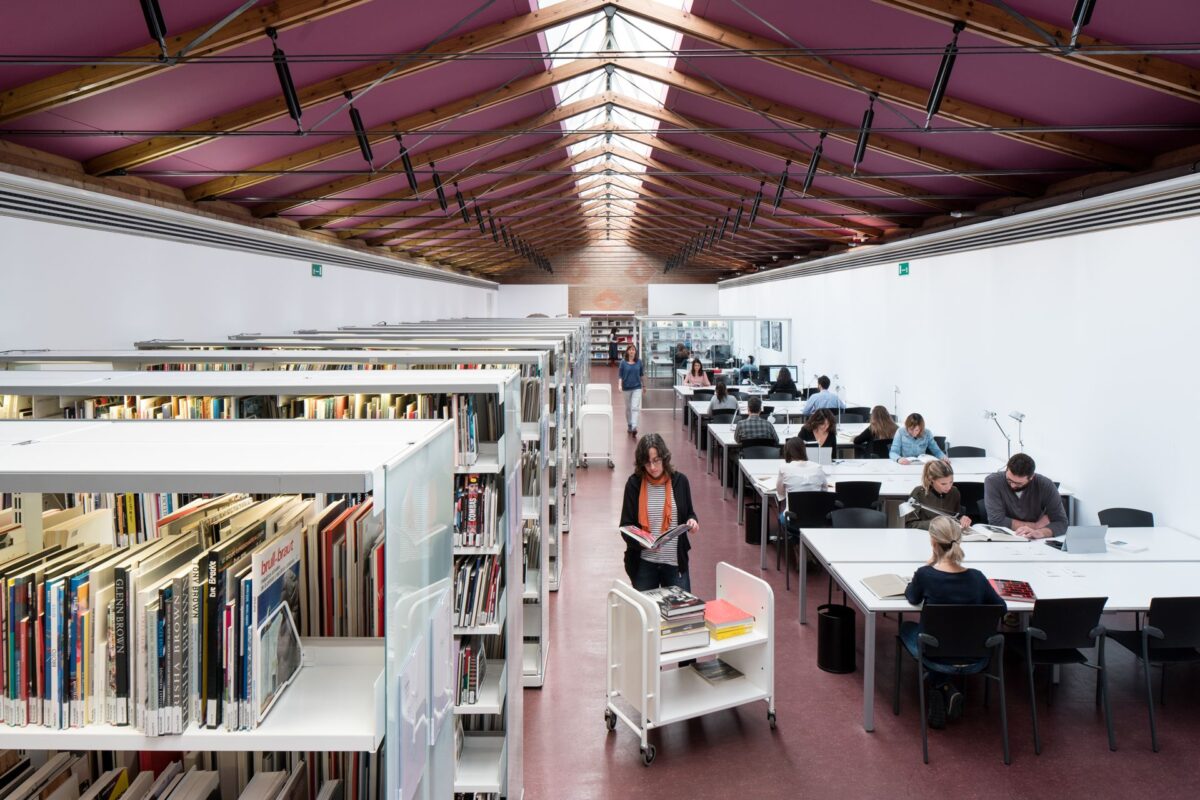
The Museu Tàpies library stands out for its solidity and its clear vocation as a space for thought, beyond simple consultation. Specialized in modern and contemporary art, it houses tens of thousands of volumes, including books, exhibition catalogues, and theoretical publications.
One of its most distinctive features is that it is largely based on Antoni Tàpies’ personal library, offering a direct insight into his intellectual universe and influences. From this foundation, the collection has grown to include materials from diverse disciplines—from painting and sculpture to performance, cinema, and more experimental practices—as well as specific collections of Asian, African, and Oceanic art. The result is a library that not only documents art but invites reflection from multiple perspectives.
CCCB: when the archive is seen and heard
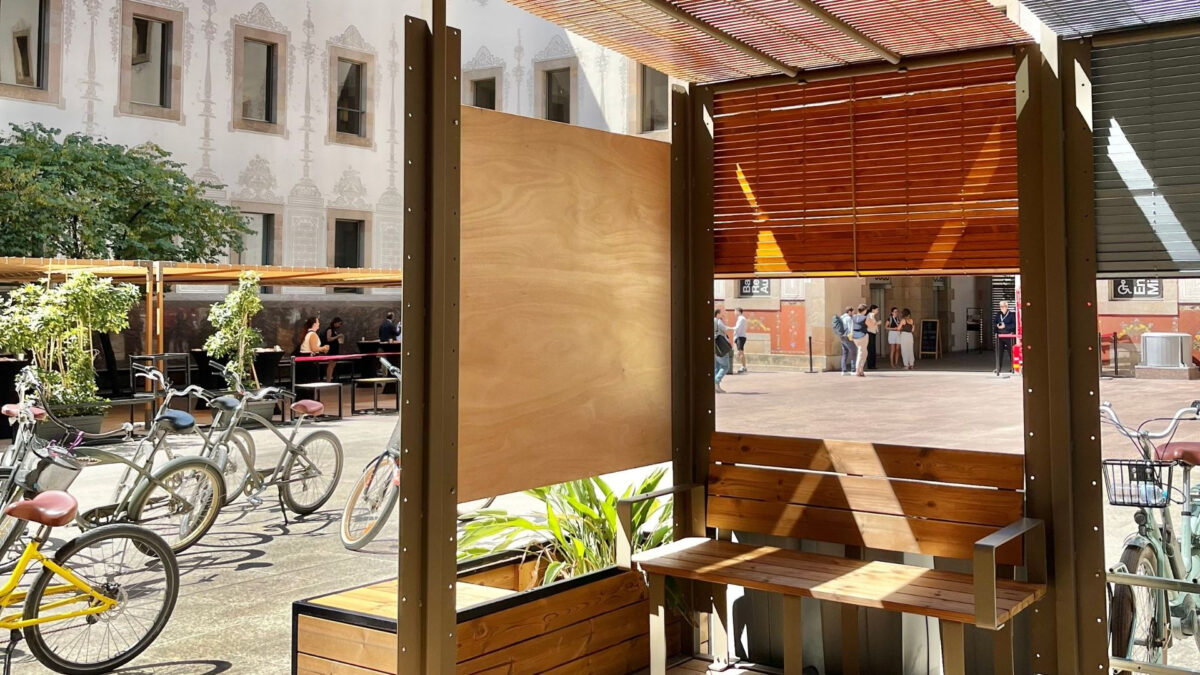
With the Xcèntric archive, the CCCB expands the idea of a library into a more audiovisual realm. Focused on experimental and auteur cinema, this archive brings together a collection of works that are often difficult to access outside specialized circuits.
What makes it particularly interesting is that these materials are not only preserved but activated through screenings, cycles, and public programs that allow them to be experienced in context. In this way, the archive becomes a living space that connects research with practice, proposing another way of “reading” content: through time, through the gaze, and through shared experience.
Fundació Joan Miró: mapping an artistic constellation
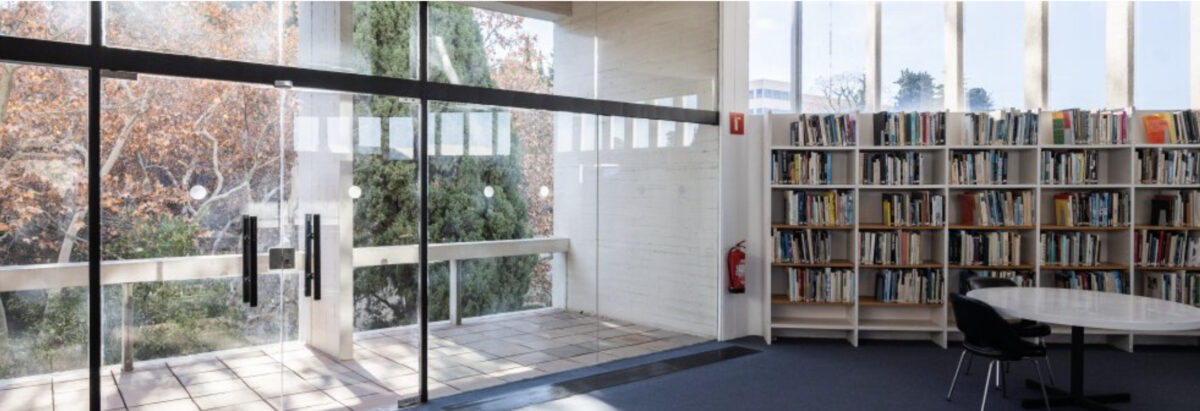
The Jacques Dupin Library at the Fundació Joan Miró functions as a documentation center that helps understand the artist within a broader network of relationships and influences. Its collection includes monographs, exhibition catalogues, and specialized studies, as well as materials that place Miró within the context of avant-garde movements and 20th-century art.
This contextual dimension is particularly relevant, as it transforms the library into a tool for mapping an artistic constellation beyond a single name. Consulting its holdings is not only about delving into Miró’s work and personal library, but also about understanding the dialogues he established with other artists and movements of his time. The exceptional personal archive of Josep Lluís Sert, architect and friend of Joan Miró, is also preserved here.